If you’ve ever stared at a sleek car door, a precisely fitted trunk lid, or the intricate frame of a battery-electric vehicle (BEV) undercarriage, you’ve held in your hands a product that’s been shaped by automotive stamping. For 12 years, I’ve run a mid-sized stamping supplier’s shop floor—watching hundreds of parts come and go, some flying off the line because every variable aligned just right, others causing late nights, rework, and frustrated customers. Over time, I’ve learned that formability—the ability of a sheet metal blank to deform into a desired shape without cracking, wrinkling, or distorting—isn’t just about the type of metal you pick. It’s a tangled web of material science, press setup, part design, and even the environment in our shop. Today, I want to break down the factors that make or break a stamping part’s formability, from the lessons we’ve learned on the floor to the research that keeps us from missing a delivery date when a new model launches. Automotive Stamping Part
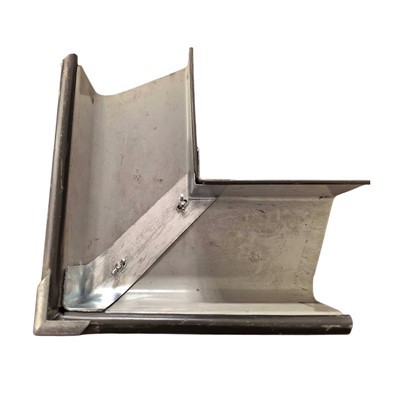
First and foremost, it all starts with the material—more specifically, its intrinsic mechanical properties. I can’t tell you how many times we’ve gotten a last-minute request from a Tier 1 automaker to switch from a standard mild steel to a high-strength steel (HSS) for a door beam, thinking it’s just a “metal swap.” But HSS has different formability characteristics. Mild steel, which we use for inner door panels, has a high elongation rate—usually 30% or more—meaning it can stretch a lot before it cracks. That’s why it’s easy to form into complex curves without issue. But dual-phase (DP) steel, a common HSS for crash parts, has elongation rates between 10% and 25%, and it’s much stiffer, with higher yield and tensile strength. Last year, we tried a DP 780 for a new pickup truck’s bed rail without adjusting our blank size first, and we ended up with three out of every 20 parts cracking along the sharp bends. We had to re-engineer the blank to have a larger radius at the bend point, which added two days to the run, but that’s the kind of catch you only learn when you don’t just pull a material spec off a shelf—you test its actual formability. We also work with aluminum for EV parts, especially heat shields, which has a lower yield strength than steel but a higher springback tendency. A springback is when the part springs back slightly after it’s pressed, so if you design a bracket with a 90-degree bend, aluminum might end up at 87 degrees, which throws off the assembly line. That means we have to overbend the tool to compensate, a trick we only pick up from testing each material’s yield strength, anisotropy, and n-value (the strain hardening coefficient, which tells you how the metal hardens as it stretches). Anisotropy is a big one, too—some metals are stronger in one direction than another, so you have to align the blank’s grain properly before stamping. If you don’t, you’ll get uneven stretching, and parts will fail. We now run a quick grain orientation test on every new material shipment, using a simple etch method, to make sure we’re not wasting time on bad blanks.
Next, part design is non-negotiable when it comes to formability, and it’s something automakers sometimes rush because of model deadlines. Sharp radii, deep draws, and uneven wall thickness are the three biggest enemies. We once got a design for a small EV battery tray that had a 2mm radius on a support beam, which is barely half the standard 4mm we use for similar parts. The sharp radius created a point of extreme stress concentration, and when we ran the first trial, 15% of the parts split along that edge. We went back to the design team and walked them through our press logs, the stress simulations we ran, and the failure analysis on the cracked parts, and they agreed to widen the radius to 4mm. It added a little material to the part, but it cut our rework rate to zero. Deep draws are another issue. If a part has a draw depth more than 2.5 times its width, the metal has to stretch too much in a single area, leading to wrinkling or tearing. That’s why we push our customers to split deep parts into multiple draws or add draw beads—small ridges in the die that control how the metal flows into the cavity. Draw beads might sound simple, but getting their height and tension right takes trial and error. Too little tension, and the metal flows too fast, causing wrinkling along the flange; too much tension, and it stretches too much in the punch area, leading to cracking. We’ve had to adjust draw bead settings three or four times in a single run when a part’s design was just a little too aggressive, but that’s a small price to pay for delivering a part that fits perfectly on the assembly line. Also, symmetry matters. Asymmetrical parts, like a driver-side door panel vs. a passenger-side panel, have uneven material flow because the left and right sides of the die are exposed to different amounts of tension. We’ve had to add a dummy pocket to the passenger-side die to balance the flow, which is a trick we’ve built up over years of dealing with tricky designs.
Then there’s press and tooling setup—this is where our shop’s expertise really shines, because even the best material and design can fail if the press isn’t calibrated right. Press tonnage, blank holder force, and lubrication are the three key variables here. Press tonnage is the amount of force the press applies to form the part; too little, and the part won’t fully take the shape of the die, leading to distortion; too much, and you can crack the die or the metal. Last quarter, we had a problem with a chassis crossmember that was coming out with uneven wall thickness. We checked the press tonnage, and it was set 10 tons too low on the right side of the die, causing the metal to stretch more there. A quick calibration fixed the issue, and the wall thickness evened out. Blank holder force (BHF) is the force that holds the blank in place during forming, preventing wrinkling while letting the metal flow into the die. We use hydraulic blank holders for most of our runs, because they let us adjust BHF across different zones of the die—something mechanical holders can’t do. For a complex door panel, we’ll set higher BHF along the outer flange to stop wrinkling, and lower BHF along the inner draw area to let the metal flow smoothly. If you set BHF too high overall, the metal can’t move, leading to stretching and cracking, which is exactly what happened on that DP 780 bed rail run I mentioned earlier. Lubrication is another big one. We’ve tried dry runs, heavy oil, and even polymer-based lubricants, and each works differently depending on the material and part. For aluminum, a water-based lubricant works best because it prevents galling—when the aluminum sticks to the die surface, leaving scratches on the part. For high-strength steel, we use a heavy-duty anti-weld lubricant to stop the metal from sticking to the punch during deep draws. Last year, we switched to a new lubricant supplier, and we had to adjust our BHF by 15% because the new lubricant had lower friction, which made the metal flow faster. We test every lubricant on a small trial run before full production, and we keep detailed logs of each setup so we don’t have to reinvent the wheel for repeat parts.
Environmental factors are something most people don’t think about, but they matter a lot on our shop floor. Temperature and humidity can affect material properties and lubricant performance. In the summer, our shop heats up to 90 degrees Fahrenheit in some areas, and we’ve noticed that mild steel gets a little softer when it’s warm, which means it stretches more than it does in the winter. If we don’t adjust our BHF when the temperature rises, we end up with more wrinkling. Humidity affects lubrication, too—high humidity can thin out oil-based lubricants, reducing their friction resistance. Last month, during a week of heavy rain, our lubricant tests showed 20% lower viscosity than normal, so we increased the lubricant’s concentration in the mix, which fixed the problem. We also keep our material stock in climate-controlled warehouses, because if steel or aluminum gets too cold, it becomes more brittle, increasing the risk of cracking. We’ve learned to check material temperature before each run, especially in the winter, to make sure it’s within the optimal range for forming.
Finally, process control and quality checking are what turn all these factors into consistent, reliable parts. We run three trial runs for every new part: a small 10-part trial to check formability and adjust tooling, a 50-part trial to test production speed, and a full production trial to make sure everything holds up over a long run. We use coordinate measuring machines (CMMs) to check part dimensions, and we do stress testing on sample parts to make sure they meet the automaker’s strength requirements. We also have a team of experienced operators who can spot a problem before it becomes a full production issue. A good operator will notice if the blank is loading unevenly, if the lubricant is too thin, or if the press is making an unusual noise, and they’ll stop the run before we waste a batch of material. Last year, one of our senior operators caught a cracked die insert during a trial run—something the quality control team missed at first—and we were able to replace it before we ran 1,000 parts with defects. That’s the kind of attention to detail that comes from years on the floor, not just from software or simulations.
I’ve been in this business long enough to know that no two stamping parts are the same. A door panel for a compact car has completely different formability needs than a battery tray for an EV, and a truck frame beam is worlds away from a small bracket for a SUV. The worst mistake a supplier can make is to treat every part like a generic stamping, skipping the material testing, rushing the design reviews, or cutting corners on tooling setup. At our shop, we don’t just stamp metal—we work with our customers to make sure every part is formed correctly, on time, and to their exact specifications. If you’re an automaker, engineer, or procurement manager looking for a stamping partner that understands the nuances of formability, we can help you navigate every step of the process, from material selection to final inspection. Don’t waste time on suppliers that see stamping as a commodity—work with someone who’s been there, fixed the mistakes, and knows exactly what it takes to get it right.
Automotive Stamping Part References:
- Kotlarz, R. (2018). Metal Forming: Mechanics and Metallurgy. Cambridge University Press.
- Groover, M. P. (2020). Fundamentals of Modern Manufacturing: Materials, Processes, and Systems. Wiley.
- Nakanishi, T., & Takuda, H. (2015). Fundamentals of Sheet Metal Forming. Springer.
Yuyao Aozhou Metal Products Co., Ltd.
We are one of the most experienced automotive stamping part manufacturers and suppliers in China. With a professional production team, we are able to meet the needs of the majority of our customers. Please rest assured to buy customized automotive stamping part made in China here from our factory.
Address: No.6, Nanbailonggang, Wuma Industrial Zone, Lubu Town, Yuyao City
E-mail: xqr-2316@163.com
WebSite: https://www.cnaozhou.com/
