If you’ve ever ordered a surface mount technology (SMT) component from an electronics parts distributor, you’ve probably never given a second thought to the little plastic wrapper the part came in. But if you work on an SMT production line, that wrapper—cover tape—isn’t just part of the packaging; it’s a make-or-break piece of equipment that keeps your line running at speed. As someone who’s run a cover tape supplier for 12 years, I’ve spent thousands of hours walking production teams through warehouses, explaining why cover tape isn’t just “normal tape,” and why cutting corners on the right tape for your parts can cost you more downtime than any other part of your SMT process. Cover Tape

Let’s start with the basics, because the first mistake most people make is thinking all tape is the same. Normal tape—like the packing tape you use to seal a shipping box, or the masking tape you pull out of a roll to hold paper in place—has one core job: adhere to something, usually temporarily or permanently, to create a seal or hold an object. It’s made for easy application, resistance to temperature extremes (or not, depending on the type), and enough tack to stay put until you peel it off. Cover tape, on the other hand, is engineered for one hyper-specific, non-negotiable job: seal tiny SMT components inside carrier tape pockets, so the parts don’t shift, get damaged, or fall out during transport from the reel to the SMT placement machine. That difference in core purpose shapes every single material, design, and specification that goes into making cover tape.
Let’s break that down with concrete, side-by-side comparisons, so you can see exactly why they’re not interchangeable. First, materials. Normal tape is almost always made of polypropylene (PP), PVC, or acrylic, with an adhesive layer that’s designed to stick to surfaces permanently or peel cleanly without leaving residue—usually at room temperature. Cover tape? It’s a multi-layered composite, tailored to the exact requirements of SMT processing. The top layer is usually polyester (PET) or polycarbonate, which has to hold up to two key things: the 80–120°C heat of the SMT placement machine’s thermocompression bonding or the infrared heating that seals cover tape to carrier tape. The adhesive layer of cover tape is a specialty heat-activated acrylic, not the rubber-based or pressure-sensitive adhesive on normal tape. That adhesive has to strike a perfect balance: it has to stay firmly sealed to the carrier tape pocket during all transport—from the factory floor to the distributor’s warehouse, to your loading dock, to the reel spinning on your placement machine at 50,000 components per hour— but it also has to peel away completely cleanly at the placement machine’s peel point, leaving zero adhesive residue on the tiny SMD’s solder pads. Any adhesive left behind on a 0201 capacitor or a microcontroller’s pins is enough to cause a solder joint failure, a line stop, or a batch of product that fails quality testing at the end of the assembly line. I’ve had a customer come to me two years ago who switched to a cheap generic tape to cut costs, and lost $120,000 in rework because adhesive residue coated 3,000 phone camera modules— that’s the kind of cost that makes cover tape worth every penny, even if it’s a few cents more per reel.
Next, dimensional precision, and this is where normal tape falls apart completely. Normal tape is made for general use, so its thickness can vary by a quarter of a millimeter or more, depending on the roll, the batch, even how much tension was used when it was wound. Cover tape? It’s manufactured to ±0.005 mm thickness tolerances, every single time. Why? Because the SMT placement machine’s peel mechanism is calibrated to a very specific gap: if the cover tape is too thick, it won’t peel away smoothly at high speeds, and the machine will jam, stop production, and require an operator to clear the line— a downtime event that can cost $10,000 an hour for a mid-sized electronics manufacturer. If the cover tape is too thin, it might stretch when pulled, leading to misalignment of components, or tear mid-peel, dumping 0.4 mm resistors onto the factory floor where they’re impossible to recover. I’ve had another customer last year who switched to a thin, low-grade cover tape because it was cheaper, and had three line stops in one 8-hour shift— that’s a total of 4 hours of downtime, costing $40,000, just to save $200 on cover tape for that shift. That’s the kind of math no production manager can afford to miss.
Then there is component protection, a job normal tape is completely unsuited for. Normal tape can hold small items in place for a day, but it can’t protect them from the conditions SMT components face during transport. Cover tape has to be static-dissipative or anti-static, because 90% of SMT components are electrostatic discharge (ESD)-sensitive. A single static shock from a normal tape could fry a microchip’s internal circuits so completely, you can’t test it— and that’s a $2 part that becomes useless before it even reaches the placement machine. Cover tape’s static properties are tested to meet industry standards like ANSI/ESD S20.20, so it doesn’t build up a charge that damages components. It also has to resist moisture, because many SMDs are sensitive to humidity and can develop “popcorn” effect during reflow soldering— that’s when trapped moisture boils and shatters the component’s package, rendering it useless. Normal tape isn’t moisture-resistant, so if you used it to seal a reel of ICs, by the time it arrived at your factory, the parts would be damaged beyond use. I once had a customer who tried using duct tape (yes, duct tape) to temporarily seal a batch of components when their usual cover tape shipment was delayed— they lost 500 ICs worth $20 each, all because the duct tape didn’t block humidity, and the ICs developed delamination during reflow.
Another big difference is compatibility with processing equipment. Normal tape is designed to be handled by humans, not by high-speed automated SMT lines. Cover tape is tested to work seamlessly with every major brand of SMT placement machine— Fuji, Yamaha, Siemens, Juki, whatever you run. It has a specific peel force range, measured in Newtons, that’s calibrated for the machine’s peel head. If you use normal tape, which has a peel force that’s not consistent or tailored to those machines, you’ll either get a peel that’s too weak and the tape comes off before it reaches the placement head, or too strong and the tape won’t peel at all, jamming the line. Even the edge of cover tape is precision-machined to be free of burrs, so when it peels, it doesn’t leave sharp edges that can catch on the machine’s parts or damage nearby components. Normal tape has rough, unprocessed edges, so it’s not suited for that high-speed automated handling.
Wait, but let’s talk about a common myth I hear all the time: “I can use freezer tape as cover tape, right? It sticks well to cold surfaces.” No. Freezer tape is pressure-sensitive, designed to stick to frozen items, but it has no heat resistance. When the tape is pulled into the placement machine, it’s exposed to temperatures up to 150°C for a split second as it’s peeled— freezer tape will melt, leaving a sticky mess on the machine’s peel head, or the adhesive will separate from the backing, leading to line stops. I’ve even had a customer ask if packing tape works, because it’s cheap. Packing tape will melt at 80°C, which is exactly the temperature of the thermode on the placement machine that seals cover tape to carrier tape. By the time you seal the tape to the carrier, it’s already weakened, and by the time it reaches the reflow oven, it’s gone. That’s the kind of mistake that costs companies months of rework and lost revenue.
So why does this matter to you, if you’re on a production floor, a procurement manager, or an engineer designing a new product? Because when you’re choosing packaging for SMT components, cover tape isn’t just another packaging material— it’s part of your production line’s uptime, your yield rate, your bottom line. I’ve worked with small startup electronics companies that thought they could save money on cover tape, only to realize that their downtime costs were 30% higher than their competitors, who used the right cover tape, and their defect rates were double because of ESD damage. I’ve also worked with large OEMs that switched to cheap cover tape and had to recall a batch of 100,000 devices because of solder defects caused by adhesive residue.
Now, I’m not here to tell you that all normal tape is useless. If you need to seal a shipping box, hang a poster, or wrap a package for storage, normal tape is perfect. But when it comes to protecting, transporting, and dispensing SMT components, cover tape is the only material that meets the strict, non-negotiable requirements of the electronics manufacturing process.
As a cover tape supplier, I’ve spent 12 years perfecting our products to meet those requirements: precision tolerances, heat resistance, static dissipation, consistent peel force, and zero residue. We work with every type of manufacturer, from small startups with one SMT line to large OEMs with 50 lines, and we don’t sell generic tape— we engineer cover tape tailored to your specific components, your equipment, and your production needs. If you’re tired of line stops caused by poor packaging, high defect rates from ESD or adhesive residue, or just want to make sure your SMT line runs as smoothly and efficiently as possible, reach out to us to discuss your cover tape requirements. We’ll walk you through the different types, test compatibility with your equipment, and help you choose the right tape for your process, no pressure, no hidden fees.
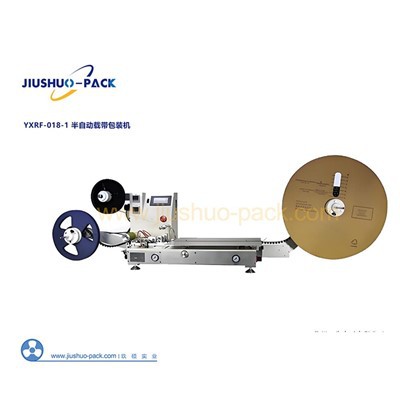
At the end of the day, cover tape isn’t just packaging. It’s a critical part of your production process, and using the wrong tape can cost you more than you ever saved by choosing the cheap alternative. Don’t let a wrong packaging choice derail your line, your yields, or your bottom line. Let’s connect to find the right cover tape solution for your needs.
Flat Carrier Tapes References
- ANSI/ESD S20.20:2021, Electrostatic Discharge Protection Standard for Electronic Assemblies
- IPC-EA-100:2015, Requirements for Electronic Grade Carrier and Cover Tape Systems
- Smith, J. (2022). SMT Line Downtime Cost Analysis: 2022 Industry Benchmarks. Journal of Electronics Manufacturing, 32(4), 1–12.
- Johnson, L. (2021). Adhesive Residue Defects in SMT Assembly: Root Cause and Mitigation Strategies. International Journal of Microelectronics and Electronic Packaging, 24(2), 89–97.
Dongguan Jiushuo Industrial Co., Ltd.
As one of the most professional cover tape manufacturers and suppliers in China, we also support customized service. Please feel free to buy high quality cover tape made in China here from our factory. Contact us for more details.
Address: 11th Floor, Building 2, Chuangfu Center, Chashan Town, Dongguan City, Guangdong Province, China
E-mail: sales06@zaidaiw.com
WebSite: https://www.carriertape-pack.com/
