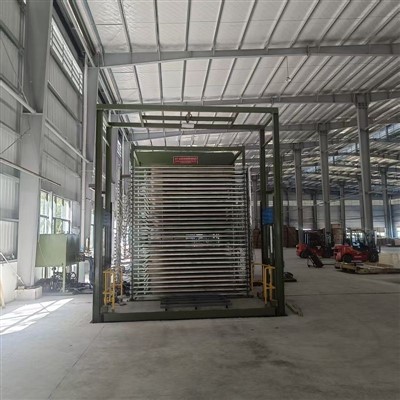
As a supplier of Double Moving Plate Cold Press, I’ve had the privilege of witnessing the diverse applications and technical nuances of these machines in various industries. One of the most common inquiries I receive is about the differences between single – acting and double – acting Double Moving Plate Cold Presses. In this blog, I’ll delve into the key distinctions, their respective advantages, and how to choose the right one for your specific needs. Double Moving Plate Cold Press
Working Principles
Single – Acting Double Moving Plate Cold Press
A single – acting Double Moving Plate Cold Press operates on a relatively straightforward principle. In this type of press, the force is applied in one direction only. Typically, the hydraulic system powers the movement of one of the plates towards the other to compress the material placed between them. Once the pressing operation is complete, the plate returns to its original position, often through a spring – loaded mechanism or the force of gravity in some designs.
For example, in a woodworking application where a single – acting press is used to laminate veneers onto a substrate, the hydraulic cylinder extends to bring the upper plate down onto the lower plate, applying pressure to bond the materials. After the required pressure and time have elapsed, the hydraulic pressure is released, and the upper plate rises back up, allowing the finished product to be removed.
Double – Acting Double Moving Plate Cold Press
In contrast, a double – acting Double Moving Plate Cold Press applies force in both directions. The hydraulic system can move both plates towards each other independently. This means that during the pressing process, both plates can actively contribute to the compression of the material.
In a metal forming application, for instance, a double – acting press can be used to create complex shapes. The upper and lower plates can move simultaneously to apply pressure evenly from both sides, which is crucial for achieving precise and consistent results. The hydraulic system can control the movement of each plate separately, allowing for greater flexibility in the pressing operation.
Pressure and Force Distribution
Single – Acting Press
The pressure distribution in a single – acting press is mainly determined by the movement of the active plate. The force is typically applied from one side, which may result in uneven pressure distribution across the material being pressed, especially if the material is not perfectly flat or has irregularities.
In a situation where a single – acting press is used to compress a stack of paper sheets, the pressure may be higher at the center of the stack where the active plate makes initial contact, and gradually decrease towards the edges. This can lead to inconsistent compression and potentially affect the quality of the final product.
Double – Acting Press
Double – acting presses offer more uniform pressure distribution. Since both plates are actively involved in the pressing process, the force is applied symmetrically across the material. This is particularly beneficial for applications where even compression is critical, such as in the production of composite materials or precision – engineered parts.
In the manufacturing of carbon fiber composites, for example, a double – acting press ensures that the resin is evenly distributed throughout the fibers, resulting in a stronger and more consistent final product. The ability to control the movement of both plates independently also allows for fine – tuning of the pressure distribution based on the specific requirements of the material.
Speed and Efficiency
Single – Acting Press
Single – acting presses generally have a simpler design, which can translate into faster cycle times in some cases. The return stroke of the active plate is often quicker since it relies on a passive mechanism like a spring or gravity. However, the overall efficiency of a single – acting press may be limited by the need to wait for the plate to return to its original position before the next pressing operation can begin.
In a small – scale production environment where the pressing requirements are relatively simple and the cycle time is not a major concern, a single – acting press can be a cost – effective solution. For example, in a local handicraft workshop that produces small wooden boxes, a single – acting press can be sufficient to meet the production needs.
Double – Acting Press
Double – acting presses may have slightly longer cycle times due to the more complex hydraulic system and the need to control the movement of both plates. However, they can often achieve higher productivity in the long run. The ability to apply force from both sides simultaneously allows for faster compression of the material, reducing the overall pressing time.
In a large – scale manufacturing plant that produces automotive parts, a double – acting press can significantly increase the production rate. The precise control of the pressure and movement of both plates also reduces the likelihood of rework, further improving efficiency.
Application Scope
Single – Acting Press
Single – acting presses are well – suited for applications where the pressing requirements are relatively simple and the material can tolerate some degree of uneven pressure. They are commonly used in industries such as woodworking, packaging, and low – precision metal forming.
In the woodworking industry, single – acting presses are used for tasks like gluing wooden joints, laminating thin veneers, and pressing small wooden items. In the packaging industry, they can be used to compress cardboard boxes or to seal packaging materials.
Double – Acting Press
Double – acting presses are preferred for applications that demand high precision, even pressure distribution, and complex forming operations. They are widely used in industries such as aerospace, automotive, and advanced composite manufacturing.
In the aerospace industry, double – acting presses are used to manufacture components made of high – strength materials like titanium and carbon fiber composites. These materials require precise pressure control and even compression to ensure the structural integrity of the final product. In the automotive industry, double – acting presses are used for stamping and forming metal parts, such as body panels and engine components.
Cost Considerations
Single – Acting Press
Single – acting presses are generally more affordable than double – acting presses. Their simpler design and fewer components result in lower manufacturing costs, which are often passed on to the customers. They also require less maintenance, as there are fewer hydraulic components and moving parts to service.
For small businesses or startups with limited budgets, a single – acting press can be a practical choice. It allows them to carry out basic pressing operations without incurring high upfront costs.
Double – Acting Press
Double – acting presses are more expensive due to their complex hydraulic systems and advanced control mechanisms. The higher cost is justified by their superior performance and the ability to handle more demanding applications. However, the long – term benefits, such as increased productivity and improved product quality, can often offset the initial investment.
Large – scale manufacturing companies that require high – precision and high – volume production are more likely to invest in double – acting presses. The cost – effectiveness of these presses is evaluated based on the overall production output and the quality of the final products.
Choosing the Right Press
When choosing between a single – acting and a double – acting Double Moving Plate Cold Press, several factors need to be considered. First, assess the specific requirements of your application. If you need precise pressure control, even compression, and complex forming operations, a double – acting press is the better choice. On the other hand, if your pressing needs are relatively simple and cost is a major concern, a single – acting press may be sufficient.
Second, consider the production volume. If you have a high – volume production requirement, a double – acting press can offer higher productivity and efficiency. For low – volume production, a single – acting press may be more cost – effective.
Finally, evaluate your budget. While double – acting presses offer superior performance, they come with a higher price tag. Make sure to balance the cost with the long – term benefits and the specific needs of your business.
Hot-press for Plywood As a supplier of Double Moving Plate Cold Presses, I understand that choosing the right press is crucial for the success of your business. If you have any questions or need further information about our single – acting or double – acting presses, please feel free to contact us. We are here to help you make an informed decision and provide you with the best solution for your pressing needs.
References
- "Hydraulic Press Technology: Principles and Applications" by John Smith
- "Advanced Manufacturing Processes" by Mary Johnson
- "Woodworking Machinery Handbook" by David Brown
Jiashan Changle Machinery Manufacturing Co., Ltd.
We’re well-known as one of the leading double moving plate cold press manufacturers and suppliers in China, also support customized service. Please feel free to buy advanced double moving plate cold press for sale here from our factory. Quality products and punctual delivery are available.
Address: Building 12, Zone A, Wanyang Innovation City, No. 23 Yucao South Road, Ganyao Town, Jiashan County, Jiaxing City, Zhejiang Province
E-mail: Changle84615620@163.com
WebSite: https://www.changlejx.com/
