Hey there! I’m a supplier of Plansifters, and I’ve been in this business for quite a while. One question that often comes up from our customers is, "How does the vibration mode of a Plansifter affect its performance?" Well, that’s what I’m gonna talk about in this blog. Plansifter
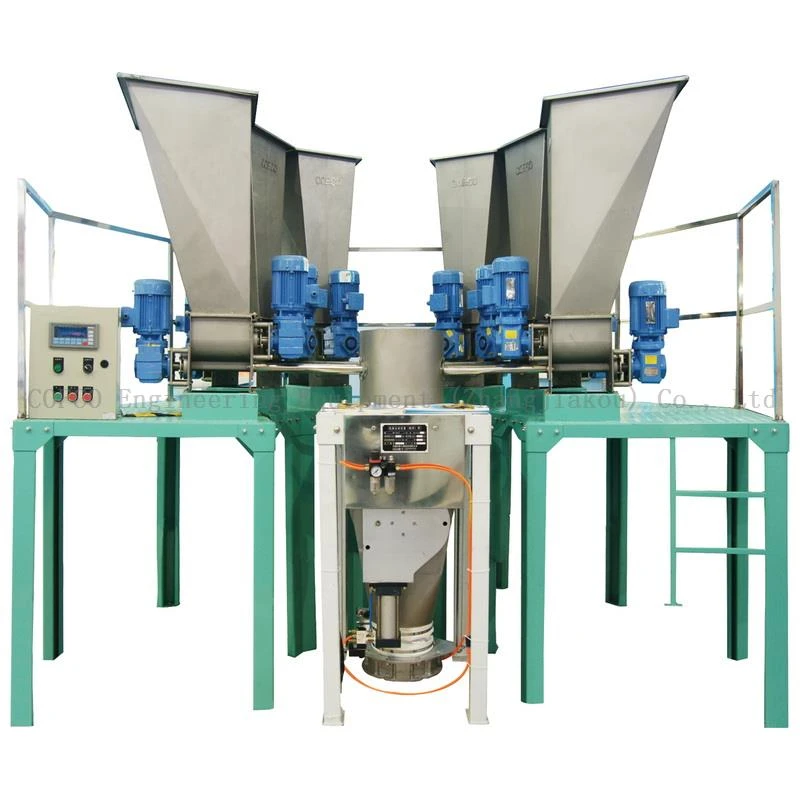
First off, let’s understand what a Plansifter is. It’s a key piece of equipment in the grain processing industry. Its main job is to separate different-sized particles in the grain, like separating wheat flour of various fineness. And the vibration mode plays a super important role in how well it does this job.
There are different types of vibration modes for Plansifters. The most common ones are linear vibration and circular vibration. Each mode has its own characteristics and impacts on the sifting performance.
Let’s start with linear vibration. In a linear vibration mode, the sifter moves back and forth in a straight line. This kind of vibration is great for getting a high throughput. When the sifter vibrates linearly, the materials on the sieve surface are pushed in a straight direction. This makes it easier for large quantities of materials to pass through the sieve quickly.
For example, if you’re processing a large amount of wheat at once, a linear vibration mode can help you sift the wheat more efficiently. The linear movement helps to spread the materials evenly across the sieve surface, reducing the chances of clogging. And when the materials are spread out, the smaller particles can fall through the sieve holes more easily, while the larger particles are pushed to the end of the sieve for removal.
However, linear vibration also has its drawbacks. Sometimes, it might not be as effective in separating very fine particles. Since the movement is mainly in one direction, some fine particles might get stuck in the sieve holes. This can lead to a decrease in the sifting efficiency over time.
Now, let’s look at circular vibration. In a circular vibration mode, the sifter moves in a circular path. This type of vibration is excellent for separating fine particles. The circular motion creates a more complex force on the materials on the sieve surface.
The circular movement makes the materials roll and tumble on the sieve. This helps to loosen up the materials and allows the fine particles to find their way through the sieve holes more effectively. It’s also great for breaking up clumps of materials. If your materials tend to form clumps, a circular vibration mode can break them up, improving the overall sifting quality.
But circular vibration isn’t perfect either. It usually has a lower throughput compared to linear vibration. Because the circular motion is more complex, it takes more time for the materials to move across the sieve surface. So, if you need to process a large amount of materials quickly, circular vibration might not be the best choice.
Besides these two basic modes, there are also elliptical vibration modes. An elliptical vibration is a combination of linear and circular vibrations. It offers a balance between throughput and sifting quality. The elliptical motion can provide a more stable and efficient sifting process in many cases.
When the sifter vibrates in an elliptical mode, it can push the materials forward while also making them roll and tumble. This allows for a good spread of materials across the sieve surface, similar to linear vibration, and at the same time, it helps to separate fine particles more effectively, like circular vibration.
However, setting up the right elliptical vibration parameters can be a bit tricky. You need to adjust the amplitude and frequency carefully to get the optimal performance. If the parameters are not set correctly, you might not get the best results in terms of throughput and sifting quality.
Another factor related to vibration mode is the amplitude and frequency of the vibration. The amplitude is the distance that the sifter moves during each vibration cycle, and the frequency is the number of vibration cycles per unit of time.
A larger amplitude can make the materials move more vigorously on the sieve surface. This can be helpful for pushing large particles to the end of the sieve and for breaking up clumps. But if the amplitude is too large, it might cause the sieve to wear out more quickly and could also lead to the sifter malfunctioning.
On the other hand, a higher frequency can make the materials move more quickly through the sieve. It can increase the chances of fine particles passing through the sieve holes. But too high a frequency can also cause the sieve to clog more easily, as the fine particles might not have enough time to settle and pass through the holes properly.
You need to find the right balance between amplitude and frequency depending on the type of materials you’re processing and the vibration mode you’re using. For example, in a linear vibration mode with a high throughput requirement, you might want a relatively larger amplitude and a moderate frequency. While in a circular vibration mode for separating fine particles, a smaller amplitude and a higher frequency could be more appropriate.
So, how does all this affect the overall performance of the Plansifter? Well, if you choose the right vibration mode and set the correct amplitude and frequency, you can achieve a high-quality sifting result. You’ll get a better separation of different-sized particles, which means higher-quality products.
For example, in the flour milling industry, a well-performing Plansifter can ensure that the flour is of consistent fineness. This is crucial for making high-quality bread, cakes, and other baked goods. In a feed processing plant, a good sifting performance can help to separate the right-sized feed particles, which is important for the health and growth of animals.
Moreover, the right vibration mode can also reduce maintenance costs. If the sieve doesn’t clog easily, you don’t have to clean it as often. And if it wears out less quickly, you don’t have to replace it frequently. This can save you a lot of money in the long run.
In conclusion, understanding how the vibration mode of a Plansifter affects its performance is really important. Whether you need a high throughput for large-scale processing or a high sifting quality for fine particle separation, choosing the right vibration mode and adjusting the amplitude and frequency correctly can make a big difference.
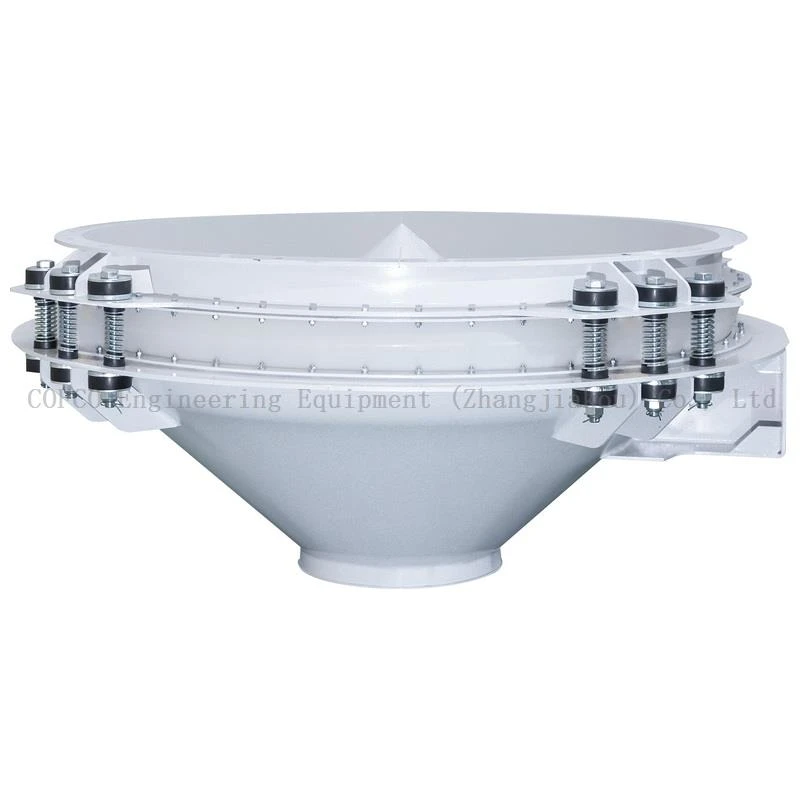
If you’re in the market for a Plansifter and want to learn more about how to optimize its performance, or if you have any questions about which vibration mode would be best for your specific needs, don’t hesitate to reach out to us. We’re here to help you make the right choice and get the most out of your Plansifter.
Feed Mixing Equipment References:
- Grain Processing Technology Handbooks
- Industry research papers on sifting equipment performance
COFCO Engineering Equipment (Zhangjiakou) Co., Ltd.
As one of the most professional plansifter manufacturers and suppliers in China, we also support customized service. Please feel free to wholesale advanced plansifter for sale here from our factory. Quality products and reasonable price are available.
Address: No.4 ZhongLiang Street, high-tech industrial development zone, Zhangjiakou, Hebei, PRC
E-mail: mayihui@cofco.com
WebSite: https://www.ceeflourmill.com/
