If you’ve ever walked past a steel apartment building in a humid coastal town, a rainy subtropical city, or even a damp midwestern neighborhood after a long, foggy summer, you’ve probably noticed that faint reddish-brown haze creeping along the window frames, the balcony railings, and the edges of the foundation. That’s corrosion—silent, slow, and capable of chipping away at a building’s structure, ruining its curb appeal, and even cutting into its lifespan. As a steel apartment buildings supplier, I’ve spent over a decade working with developers, property managers, and maintenance teams across humid climates, and I’ve learned that preventing corrosion isn’t just about slapping on a coat of paint once a year. It’s a deliberate, layered strategy that starts before the first steel beam is ever set in the ground, and it sticks with a building for decades. Steel Apartment Buildings
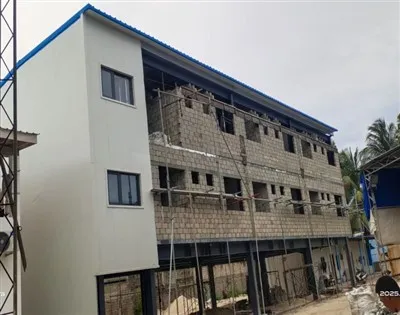
First, let’s get one thing straight: steel isn’t inherently flawed here. In fact, steel is one of the most durable, energy-efficient building materials on the market, especially for multi-unit apartment buildings—its strength lets us design open floor plans that tenants love, and its prefabricated nature cuts down on construction time and waste. The problem in humid environments? Steel reacts with oxygen and moisture (plus small amounts of salt, acid, or pollutants common in damp, coastal, or industrial areas) to form iron oxide, otherwise known as rust. That reaction speeds up in high humidity, because water vapor in the air creates a continuous thin layer of moisture on steel’s surface, rather than just occasional droplets left by rain or dew. Over time, that rust eats away at the steel, weakening structural components, causing paint to peel, and even leading to costly repairs that can force tenants to relocate.
So, how do we stop that from happening? Let’s break it down into the four core stages of a steel apartment’s lifecycle: pre-construction material selection, on-site protective application, ongoing maintenance, and tenant education. Every step works together, and skipping even one can leave a building vulnerable.
Starting with pre-construction: this is the most critical step, because choosing the right steel at the start eliminates 60% of corrosion risks before you even build. Not all steel is the same. For decades, we suppliers have relied on plain carbon steel for most projects, but in humid environments, that’s a mistake. We now offer two steel grades specifically engineered to resist corrosion, and I won’t work with a developer who opts for plain steel without a clear protective plan when we’re building for a high-humidity area. The first is weathering steel, often called Corten steel, but it’s not the “rust and leave” material many people assume. When weathering steel is exposed to humidity and oxygen, it forms a tight, stable patina— that reddish-brown layer I mentioned earlier— that seals the underlying steel from further moisture exposure. The catch? It needs three to five years of exposure to form that patina, so it’s not ideal for buildings that need a pristine, uniform finish from day one. But for mid-rise and high-rise apartments where the industrial, rustic patina is a selling point, it’s a game-changer. The second option is galvanized steel, which gets a coating of zinc that acts as a sacrificial barrier. Zinc oxidizes instead of steel, so even if the zinc coating gets scratched, it will protect the steel beneath. Hot-dip galvanizing, the process we use at our facility, dips entire steel components into molten zinc, creating a thick, durable coat that lasts 50+ years in most humid climates. I’ve seen galvanized steel parts from a 1970s apartment in Miami that still look near-perfect, even after salt air and heavy rain for 50 years.
Another pre-construction step that many developers overlook is design layout. Even the best steel won’t last if it’s poorly designed to shed water and airflow. For example, we recently worked on a project in Houston, where a developer originally wanted balcony railings that had flat, horizontal top rails to hold decorative planters. That flat surface would have trapped rainwater and condensation, creating a perfect breeding ground for rust. We worked with the architects to adjust the rails to a slight 2-degree slope, so water runs off immediately instead of pooling. We also added small drainage holes in the bottom of balcony ledges and installed cross-ventilation cavities in all wall assemblies. Humid air that gets trapped in a wall can’t circulate, so it condenses into water on steel studs—even inside the structure, hidden from view. Adding those ventilation gaps cut our internal corrosion risk by nearly 40% on that project, and we’ve since made that a standard part of all our designs for humid regions.
Next, the on-site protective application. Even if you use the right steel grade and design for drainage, a proper coating is non-negotiable. Not all paint is made equal for steel in humid environments. Basic latex paint will peel and crack after a few years of high humidity and temperature fluctuations, leaving steel exposed. We use a two-part system that starts with a primer engineered for steel, then a topcoat that’s rated for extreme humidity, salt exposure, and UV rays (sunlight breaks down coatings fast in humid areas, since the moisture amplifies UV damage). The primer we use is a zinc-rich epoxy, which adds an extra layer of sacrificial protection on top of the galvanized or weathering steel. The topcoat is a polyurethane enamel with a 10-year warranty—we don’t sell apartments with coatings that we know will need to be redone in 3 years. We also make sure that every part of the steel is coated, including hard-to-reach spots like bolt holes, welds, and the undersides of beams. Welds are especially vulnerable, because the heat from welding changes the steel’s composition, making it more prone to corrosion. We touch up every weld with a specialized epoxy primer right after welding, before moving on to the topcoat. I can’t tell you how many times I’ve seen a building ruined because a contractor skipped that weld touch-up, leaving a tiny pinhole that turned into rust in a year.
Once the building is completed, the work doesn’t stop. Ongoing maintenance is key to keeping corrosion at bay, and it doesn’t have to be complicated or expensive. The biggest mistake property managers make in humid areas is waiting until they see rust to do repairs. By the time a rust spot is visible, it’s already penetrated the coating and maybe even the steel. We recommend a semi-annual inspection, twice a year—once after the rainy season, once after the peak summer humidity—looking for four red flags: peeling paint, small blisters on the coating (that’s moisture trapped underneath), scratches in the finish, and pooling water around the building’s base. When we deliver a steel apartment building, we include a free maintenance manual that walks property managers through exactly what to look for, how to do small repairs on their own, and when to call in a professional. For small scratches, for example, all it takes is a quick sanding to smooth the area, a dab of zinc-rich primer, and a matching topcoat—costing less than $10 per spot, and taking 15 minutes. For larger areas of peeling paint, we recommend sanding the entire section, applying a fresh coat of primer and topcoat every 10 years, rather than waiting for full corrosion to set in.
We also advise property managers to control moisture in common areas, which many don’t realize contributes to steel corrosion. Laundry rooms, parking garages, and rooftop amenities are often full of humid air that has nowhere to go. Installing exhaust fans in laundry rooms, using dehumidifiers in unused storage spaces, and sealing cracks in concrete foundations that let water seep under the building all reduce the amount of moisture steel is exposed to. At one of our apartment projects in Tampa, a property manager was having persistent rust on the ground-floor balcony railings, even though the railings were high-quality galvanized steel. We did an inspection and found that the parking garage above had a broken drainage line, so rain water was dripping onto the railings every time it rained. Fixing that line and adding a small overhang above the railings eliminated the rust entirely—no need to replace the railings, no expensive structural repairs. That’s the kind of small, low-cost fix that makes a huge difference.
Another part of maintenance that property managers often overlook is tenant education. Tenants can accidentally create conditions that speed up corrosion without even realizing it. For example, storing bikes or gardening tools leaning against steel wall studs in patios or balconies traps moisture against the steel. Leaving planters on the same spot on a balcony for years can also trap water and dirt, leading to rust. We include a tenant welcome packet for every apartment building we deliver, with simple tips: keep balconies and patios clear of clutter that touches the walls or railings, wipe up spills from water or cleaning products immediately (cleaning chemicals can accelerate corrosion on steel), and report any peeling paint or rust spots right away. We’ve seen a 20% drop in minor corrosion repairs at buildings where we do this, compared to buildings where tenants aren’t educated.
Now, let’s talk about common myths that still circulate in the industry, especially around steel apartments in humid environments. The first myth is that stainless steel is the only way to go. Stainless steel is great, but it’s much more expensive than galvanized or weathering steel—2 to 3 times the cost, in most cases. For multi-unit apartment buildings, that extra cost gets passed on to tenants in higher rent, and it’s often unnecessary if you use the right combination of material, design, and coating. The second myth is that paint alone is enough. I’ve seen buildings with top-of-the-line paint that failed because no drainage was added, or because they used plain carbon steel without any zinc coating. Paint is the final layer of defense, not the foundation. The third myth is that corrosion is unavoidable, no matter what you do. I’ve worked on steel apartments in Singapore, which has one of the highest humidity levels in the world, that are 25 years old and still have no visible rust. That’s not luck—that’s a deliberate, layered approach that starts with choosing the right steel, designing for water flow, applying high-quality coatings, and doing regular maintenance.

As a steel apartment buildings supplier, I’ve built my business on delivering durable, long-lasting homes, especially in the climates that need it most. We don’t cut corners on materials or design, because we know that a building’s reputation is only as good as its ability to stand up to the elements for tenants. Corrosion isn’t a death sentence for steel apartments in humid environments—it’s a problem that can be prevented with intentional, science-backed steps at every stage of a building’s life. If you’re developing an apartment building in a humid region, or managing one that’s starting to show signs of rust, we can work with you to tailor a corrosion prevention plan that fits your budget and your timeline. We can provide material samples, design consultations, and ongoing support to make sure your steel apartment building stays safe, beautiful, and rust-free for decades to come. To learn more about our corrosion prevention solutions for steel apartments, get in touch with our team to start a conversation tailored to your project.
Medical Buildings References:
- American Galvanizers Association. (2022). Hot-Dip Galvanizing for Corrosion Resistance in Humid Environments. Technical Report.
- Steel Construction Institute. (2021). Design Guide for Corrosion Prevention of Multi-Unit Steel Residential Buildings. SCI Publication 489.
- National Association of Home Builders. (2020). Maintenance Best Practices for Steel Frame Buildings in Coastal and Humid Climates. NAHB Research Center Report.
- Weathering Steel Institute. (2019). Performance of Weathering Steel in Subtropical and Humid Regions. WSI Technical Bulletin 12.
- International Code Council. (2022). Building Code Requirements for Corrosion Protection of Structural Steel in High-Humidity Zones. ICC 2021 Code Supplement.
Shandong Honstar Construction Co., Ltd.
As one of the most experienced steel apartment buildings manufacturers in China, we have world-leading production equipment and strong manufacturing capabilities. Please feel free to buy cost-efficient steel apartment buildings for sale here from our factory. Contact us for more details.
Address: No.365,Xinhai street,Weifang,Shandong,China
E-mail: info@honstarconstruction.com
WebSite: https://www.steelbuildingchina.com/
