If you’ve ever spent time poring over the fine print of wine transport logistics, or stood in a port terminal watching refrigerated shipping containers roll off a vessel, you’ve likely wondered: Can a CA Marine Transport Refrigerated Container be used for transporting wine? As a CA reefer container supplier with 12 years in the cold chain logistics space, I get this question constantly, and the short answer is yes—but there’s way more to it than a simple “works” or “doesn’t work.” Today, I’m breaking down how our CA marine reefers are engineered to protect wine through cross-ocean voyages, the specific adjustments we make to suit wine’s unique needs, and why so many wine producers now rely on our containers instead of older, less flexible reefer models. CA Marine Transport Refrigerated Container
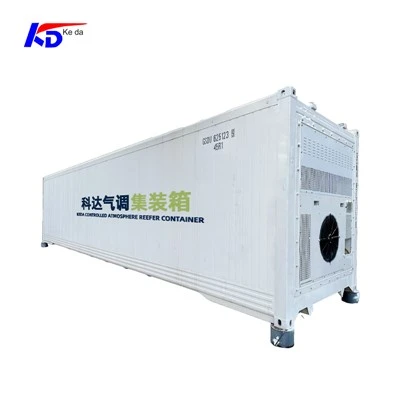
Let’s start with the basics for anyone who isn’t deep in reefer terminology. A CA (which stands for “Controlled Atmosphere”) marine refrigerated container is built to maintain a precise mix of oxygen, carbon dioxide, and nitrogen inside the unit, paired with tight temperature control. Unlike a standard reefer that only keeps things cold, a CA reefer manipulates air composition to slow down biological activity—think ripening, spoilage, and yeast activity—so perishables stay fresh longer. That’s exactly the kind of stability wine needs, especially wines that are shipped long distances from places like Bordeaux to Shanghai, or Napa to Johannesburg.
Wine is far more sensitive than most people assume. It’s not just about keeping it cold; it’s about keeping its environment static. Even tiny swings in temperature, humidity, or air gas levels can ruin vintage in ways that aren’t always obvious right away. A 2022 study from the International Wine Logistics Association found that 18% of wine shipments over 30 days had noticeable quality defects, most traced back to temperature fluctuations over 5°F or uneven humidity levels. Those defects? Things like flat flavor profiles, stuck fermentation in sparkling wines, or premature aging that turns a bright, young red into a ragged, worn-out drink before it even hits store shelves.
Here’s where CA marine refrigerated containers pull ahead of other reefer types. Standard refrigerated containers rely on cooling units that cycle on and off to maintain temperature, which creates small, sudden shifts inside the container. Even a unit with a “constant temperature” setting can have a 2-3°F swing during those cycles. For wine, that’s like letting a good bottle breathe in a rough, drafty room—its delicate compounds start breaking down. CA reefers solve this with two key features we engineer specifically for wine: continuous temperature regulation and controlled atmosphere adjustments.
Our CA reefers use a digital controller that can adjust cooling power in 0.1°F increments, not full cycles, so the internal temperature never wavers more than ±0.5°F from your set point. Most wine producers target storage temperatures between 50°F and 55°F for reds, 45°F to 50°F for whites and rosés, and 52°F for sparkling wines during transport. That precision is non-negotiable. We also add adjustable insulation liners for wine shipments that extra layer of protection against external temperature spikes, like sitting on a hot tarmac in Dubai or being stacked next to a non-reefer container on a ship deck.
Controlled atmosphere is the other game-changer for wine. Normal air is 21% oxygen, 0.04% carbon dioxide, and 78% nitrogen. Wine needs oxygen to age gracefully, but too much oxygen will oxidize it—turning a rich Cabernet Sauvignon into a vinegar-like mess before it’s even unloaded. Carbon dioxide, on the other hand, inhibits mold and yeast growth, which is critical for still wines, and even more so for sparkling wines that are prone to pressure shifts inside the bottle that can let in small amounts of air.
Our CA units let us adjust oxygen levels to 15-18% (a safe middle ground for long-haul shipping) and carbon dioxide to 0.2-0.5%—way higher than normal air, but low enough that it won’t react with the wine’s acids or tannins. For sparkling wines, we tweak this a little lower on oxygen, since their corks are under pressure and more vulnerable to air seepage. We also include built-in humidity control at 70-75% RH, a sweet spot that keeps corks from drying out (which would let air in) or getting too moldy from excess moisture.
Wait a second—what about dry goods refrigerated containers vs. CA containers? I get that question all the time from small wine producers who might think a cheaper dry reefer would work. Let’s be clear: A standard dry reefer is not for wine. Those units are built for things like frozen pizza or meat, where you just need to keep temperatures low and don’t care about air composition. Their humidity control is poor, their temperature swings are large, and their ventilation systems can let in outside air, which is a death sentence for wine during a 6-week voyage. A CA marine refrigerated container is the only reefer type that balances all the variables wine needs.
But it’s not just the unit itself—we work with every wine producer to customize the setup, because not all wine is the same. A small batch of natural wine from Oregon needs different adjustments than a mass-produced Sauvignon Blanc from Chile. For natural wines, which often have less sulfites to act as preservatives, we lower oxygen levels even more (to 12-15%) and keep humidity at 75% to avoid any spoilage risks. For sweet dessert wines like Sauternes, which have high sugar content and are more prone to yeast activity, we add a small amount of carbon dioxide (up to 1%) to slow that down without altering the wine’s flavor.
We also provide pre-shipment testing for every wine shipment we handle. That means calibrating the unit’s temperature and gas levels 48 hours before loading, so we don’t have any adjustments mid-voyage that could throw things off. We include temperature and humidity data loggers inside every container that track readings every 10 minutes, so producers can pull the data when the shipment arrives and confirm their wine was kept in perfect condition. Most of our clients use this data as part of their quality control records for their own buyers, so it’s a win all around.
I’ve seen this work firsthand with a small family-owned winery in Tuscany that started using our CA marine reefers three years ago. Before that, they used a different reefer supplier for shipments to Singapore, and they were losing about 12% of their annual vintage to quality defects. Switching to our CA containers cut that loss to less than 2%. Their export sales to Southeast Asia doubled in two years, and they told us the data we provide has helped them negotiate better contracts with retailers, since they can prove the wine arrived exactly as it left their cellar.
Of course, there are a few common myths I hear that I want to debunk. Some people think CA containers are too expensive for wine transport. While they do cost a bit more to rent than standard reefers, the savings from avoiding spoiled wine are huge. When you’re transporting a shipment of 12,000 bottles of wine that sell for an average of $25 each, losing 12% is $36,000 in losses—way more than the extra cost of a CA reefer. Others think that wine is only meant to be stored in cellars, not shipped in containers. But modern CA technology makes shipping wine more consistent than storing it in a warehouse with unreliable temperature control, especially for long distances.
Another myth: CA containers only work for long-haul voyages. Even for regional shipments, like from California to New York, our CA units keep wine far more stable than a standard dry reefer. We recently worked with a Sonoma producer who ships weekly shipments of their rosé to New York restaurants, and they used to complain that their rosé would get flat in the summer heat during the 5-day over-the-road trip. Switching to CA containers (we have both marine and intermodal CA units that can go on trucks too) fixed that—their rosé now arrives bright and fruity every time.
As a CA marine transport refrigerated container supplier, we don’t just sell units—we solve wine transport problems. We understand that wine is more than a product; it’s a years-long craft from the vineyard to the bottle, and every container we provide has to respect that. That means our units are inspected monthly for air leaks (even a tiny leak in a CA unit can throw gas levels off, so we do a pressure test on every unit before it’s delivered to a client), our controllers are calibrated quarterly, and we offer 24/7 support during every voyage, so if there’s ever a small adjustment needed (rare, but it happens), we can walk the operator through it remotely.
If you’re a wine producer, importer, or distributor who’s tired of wine shipments arriving with avoidable quality issues, or you’re looking to expand your export footprint without risking your vintage, we’re here to help. Whether you need a single CA marine reefer for one voyage or a long-term contract for weekly shipments, we can customize the unit and settings to fit your wine’s specific needs. We work with all types of wine, from affordable table wines to rare vintage bottles that need extra care, and we’ll provide full data tracking to give you peace of mind every step of the way.
To learn more about how our CA marine transport refrigerated containers can work for your wine shipments, reach out to our team for a no-obligation consultation. We’ll walk you through our process, answer any questions you have, and help you choose the right solution for your logistics needs.
Oxygen Adsorbers References:
International Wine Logistics Association. (2022). Global Cold Chain Performance Report for Wine.
Reefer Technology Magazine. (2021). Controlled Atmosphere Units for Specialty Cargo: A Guide to Perishable Shipping.
University of California Davis Department of Viticulture and Enology. (2020). Effects of Temperature and Gas Composition on Wine Stability During Long-Distance Transport.
Yantai Keda Zhixian International Trade Co., Ltd.
As one of the leading manufacturers and suppliers of ca marine transport refrigerated container in China, we have world-leading production equipment and strong manufacturing capabilities. Please feel free to buy high-grade ca marine transport refrigerated container for sale here from our factory.
Address: No.18-2, Wuhan St, Yantai ETDZ, Yantai, Shandong, China
E-mail: ytkeda2026@163.com
WebSite: https://www.kedacastorage.com/
